China built a quantum key distribution (QKD) fiber backbone of more than 2,000 kilometers between Beijing and Shanghai, and a 2021 paper in Nature described it serving more than 150 users, including banks, power grids, and government agencies (Nature). In 2017 China’s Micius satellite relayed quantum keys for a video conference between Beijing and Vienna (Physical Review Letters). The European Commission is working with all 27 member states and the European Space Agency (ESA) to build the European Quantum Communication Infrastructure (EuroQCI). Its first terrestrial phase ran from 2023 to 2025, and EuroQCI work from 2027 is to be funded under IRIS², the EU’s secure satellite connectivity program (European Commission). Each of these programs employs engineers who combine optics, telecom networking, and cryptography. Few people had reason to learn all three before these programs existed.
The market for those skills is real but narrow. QKD distributes encryption keys using single photons. An eavesdropper on the link disturbs those photons and can be detected. QKD’s theoretical security follows from quantum physics, while classical and post-quantum key exchange depend on the hardness of mathematical problems. In practice, security agencies have been cautious. The US National Security Agency (NSA) does not recommend QKD for national security systems unless several limitations are overcome, and considers post-quantum cryptography (PQC) cheaper and easier to maintain (NSA). In January 2024 the French, German, Dutch, and Swedish security agencies jointly concluded that QKD suits only niche use cases and is not yet mature enough from a security perspective, and that migration to PQC should take priority (ANSSI).
For quantum communications careers, that means QKD hiring is concentrated in national infrastructure programs, telecom operators running pilots, QKD equipment vendors, and research labs, while most enterprise demand for quantum-safe security goes to PQC. QKD skills transfer in both directions. Photonics, single-photon detection, and timing are the same skills quantum computing companies need for photonic interconnects between processors, and the cryptography and key-management skills apply directly to PQC migration.
How a QKD link changes a network
For engineers coming from classical networking, five things change.
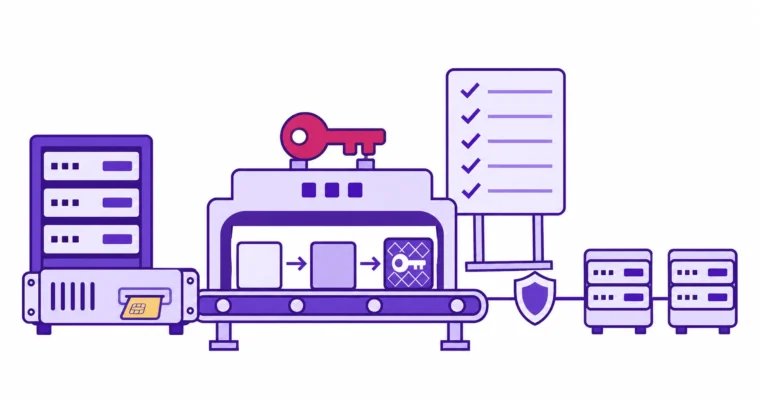
Key exchange. In a classical network, Transport Layer Security (TLS) or IPsec establishes keys through a mathematical exchange such as Diffie-Hellman. With QKD, dedicated hardware at each end of a fiber or free-space link generates shared symmetric keys continuously and hands them to the encryption devices. The GS QKD 014 specification from the European Telecommunications Standards Institute (ETSI) defines a common interface through which an encryptor requests keys from a QKD device.
Trust. Photon loss limits a single fiber QKD link to metropolitan or regional distances. Longer routes use trusted nodes, where the key is held in the clear before being passed on. Each trusted node has to be physically secured like a key vault, and every additional node adds an insider risk. Quantum repeaters that would remove the need for trusted nodes are still experimental.
Timing. Sender and receiver have to agree on which time slot each photon belongs to, with synchronization at nanosecond or finer precision. Changes in fiber temperature or length shift the timing, raise the quantum bit error rate (QBER), and reduce the key rate.
Authentication. QKD does not authenticate the two endpoints. They must authenticate each other separately, with a pre-shared key or a digital signature. Otherwise an attacker could impersonate each endpoint to the other in a man-in-the-middle attack. QKD produces keys only. A classical cipher such as AES still encrypts the data.
Integration. QKD key rates are far lower than data rates, so one QKD link typically supplies keys that protect many higher-level connections. Operators have to allocate the available keys among those connections. Many deployments combine QKD-derived keys with classical or post-quantum key exchange. In IPsec, RFC 8784 lets IKEv2 mix an additional pre-shared key into its key derivation, and some deployments feed that key from QKD. Quantum and classical signals can share one fiber on separate wavelengths if the classical channels are engineered to keep their noise out of the quantum channel.
The five skill domains
No one person covers the whole stack. QKD teams combine specialists from five areas.
Photonics and quantum optics
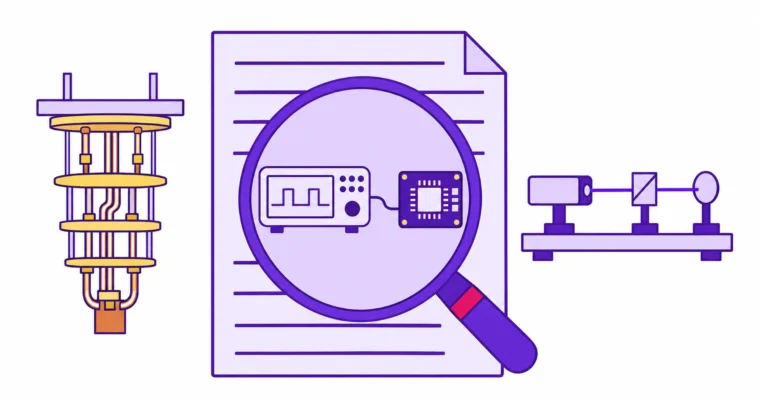
Lasers and modulators that encode quantum states on photons, single-photon detectors (avalanche photodiodes and superconducting nanowire detectors), fiber handling, polarization and phase stabilization, and filtering that lets quantum signals coexist with classical traffic. Engineers with a background in fiber-optic telecom or laser systems bring most of what is needed and learn the single-photon specifics on the job.
Protocol and software engineering
Every QKD link has a classical channel for post-processing: error correction to reconcile the two ends’ measurements and privacy amplification to remove any information an eavesdropper might hold. Engineers in this area build post-processing software, timing and synchronization protocols, key management systems that route keys to applications, and the software-defined networking controllers that manage QKD links alongside classical ones. The ITU-T Y.3800 series sets out reference architectures and functions for QKD networks.
Satellite and free-space links
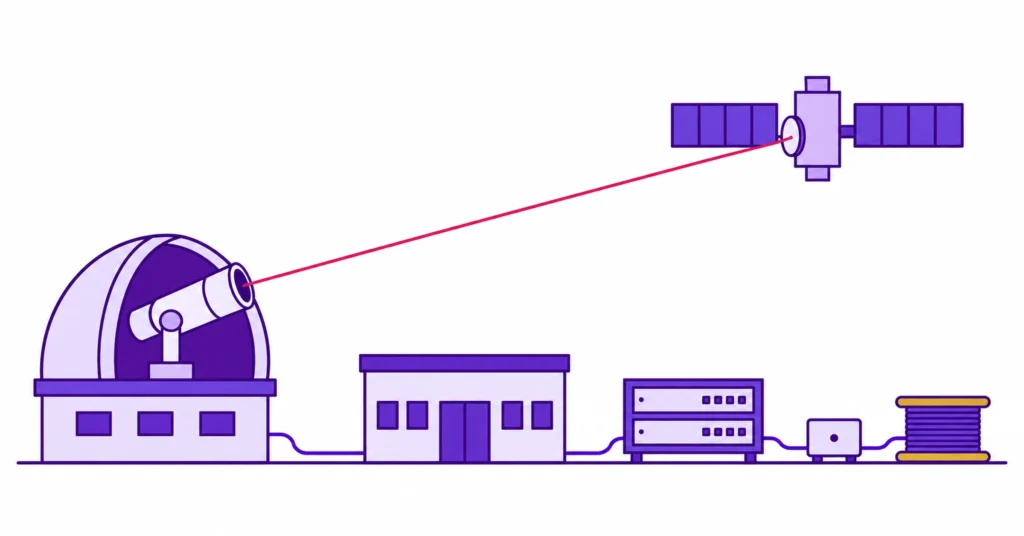
Satellite QKD extends links beyond fiber distances. Engineers here work on link budgets through the atmosphere, telescope pointing and tracking, adaptive optics, and ground-station design. ESA’s Eagle-1 satellite, which will test space-based QKD for EuroQCI, has been delayed more than once (SpaceIntelReport). ESA now expects to launch it in late 2027 (ESA). Satellite and radio-frequency (RF) communications engineers are the natural candidates for these roles.
Cryptography and key management
Specialists who decide where QKD is used and where PQC is used, design hybrid key schemes, integrate QKD keys with hardware security modules and key management systems, and evaluate implementations against known attacks such as detector blinding and Trojan-horse probing. The two parts of ISO/IEC 23837 define security requirements and evaluation methods for QKD modules.
Operations
Once deployed, QKD links need monitoring like any critical infrastructure: key rates, QBER, link availability, and fallback to classical keys when a link drops. Operations engineers diagnose whether a falling key rate comes from fiber damage, alignment drift, or interference, and replace components such as detectors that need more care than a standard optical transceiver.
Roles that don’t require a PhD
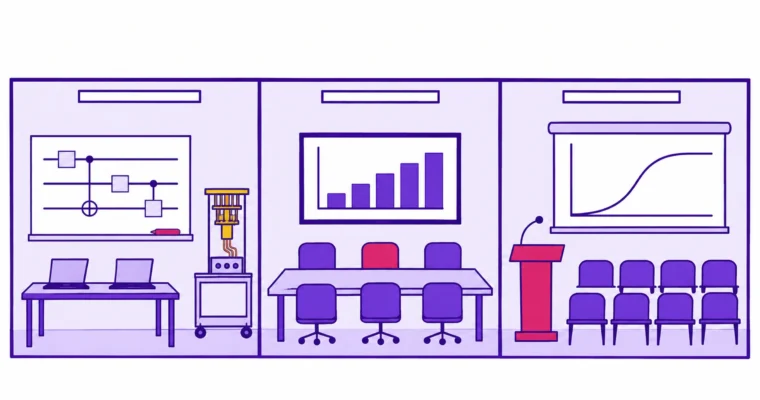
Research positions in quantum communications usually ask for a doctorate. Deployment, integration, and operations roles usually do not. They ask for strong classical skills and a working understanding of how the quantum layer behaves.
Optical network integration technician. Installs and aligns QKD equipment, splices and tests fiber, manages loss budgets, and connects QKD systems to the customer’s encryptors. Fiber technicians and telecom field engineers are the usual entrants.
QKD deployment engineer. Plans and configures QKD links in a customer environment, connects key delivery to encryptors and key management servers, and integrates monitoring. Network and security engineers who have deployed virtual private network (VPN) gateways or key management systems already know most of the work.
Test and interoperability engineer. Builds test setups that vary loss and noise, verifies that key delivery and failover behave correctly, and checks equipment against ETSI and ISO/IEC specifications. Telecom test and compliance engineers move into this role readily.
Key management and public key infrastructure (PKI) analyst. Writes policy for how QKD-derived keys are used, logged, and retired, and decides with architects where QKD applies and where PQC does. People from PKI administration and security governance fit this role.
Vendors such as Toshiba, ID Quantique, and QuintessenceLabs sell QKD systems. For every deployment, both the vendor and the operator need installation, integration, and support engineers.
Moving across from a classical role
| Current role | Quantum communications role | Skills to add |
|---|---|---|
| Fiber-optic engineer | Quantum fiber network specialist | Single-photon transmission, QKD transmitter and receiver operation, trusted-node site security |
| Network architect | QKD network architect | QKD link constraints, trusted-node placement, key management overlays, where to use QKD and where PQC |
| PKI or security administrator | Quantum security manager | NIST PQC algorithms, QKD key-usage policy, hybrid key agreement |
| Satellite or RF engineer | Free-space quantum communications engineer | Single-photon link budgets, optical ground stations, pointing and tracking for QKD |
| Software engineer | Quantum network software developer | Network simulators such as NetSquid, QKD post-processing, SDN control of quantum links |
| Cryptographer | Quantum cryptography specialist | QKD protocols such as BB84 and continuous-variable QKD, security proofs, implementation attacks |
Most people who make the move bridge two of these domains: a photonics engineer who learns networking, or a security architect who learns how single-photon devices fail.
Standards and learning resources
The standards double as study material. They describe how deployed systems work.
- ETSI ISG QKD: The European Telecommunications Standards Institute’s QKD industry specification group publishes the field’s main technical specifications, including the GS QKD 014 key delivery interface and white papers on implementation security.
- ITU-T Y.3800 series: Recommendations covering QKD network architecture, functional requirements, and key management.
- ISO/IEC 23837-1 and -2: Security requirements and test and evaluation methods for QKD.
- Simulators: NetSquid, SimulaQron, and QuTech’s Quantum Network Explorer let software engineers experiment with quantum network protocols without hardware.
- Optics credentials: Certifications such as the Certified Fiber Optic Technician credential from the Fiber Optic Association show the practical fiber skills QKD installation depends on.
There is no recognized professional certification for quantum networking yet. Employers weigh hands-on experience with optical systems, network engineering, or key management more heavily than course certificates, and a year on a QKD pilot counts for more than either.
Where to look
QKD and quantum networking roles are listed on Quantum Careers under quantum communications and networking. Engineers who want the broader quantum-safe security market should also watch quantum security and PQC roles and read our guide to PQC careers. Our Quantum Talent Map shows how communications hiring compares with computing and sensing.
First published November 1, 2025. Revised November 10, 2026: claims about specific deployments and quotations that could not be traced were removed, the description of RFC 8784 was corrected, and the positions of the NSA and European security agencies on QKD were added. Updated November 11, 2026: the Eagle-1 launch date and the EuroQCI timeline now follow the current ESA and European Commission pages, and the description of China’s backbone network now cites its 2021 source.