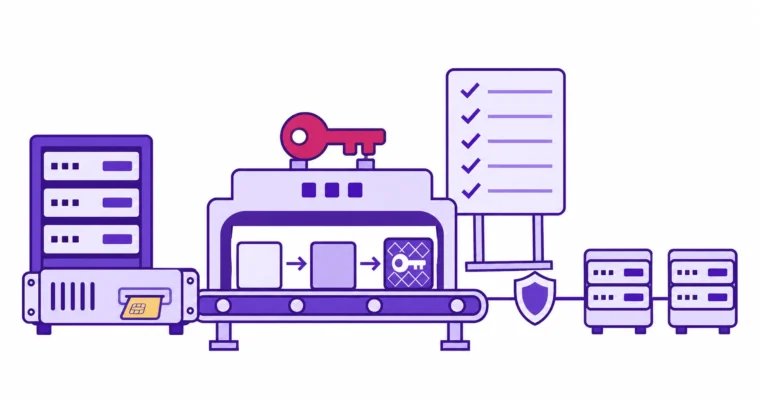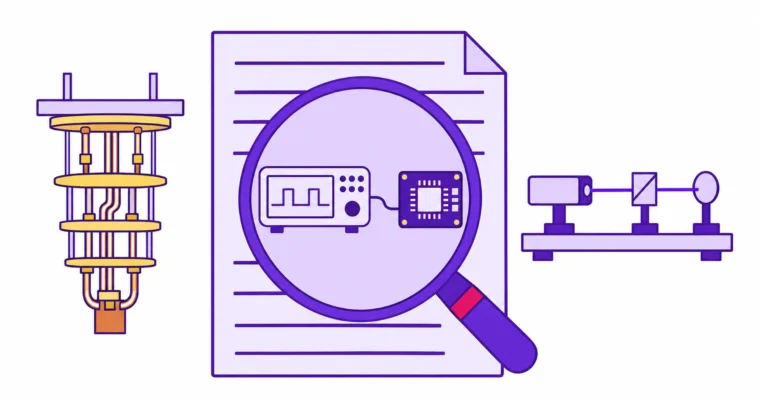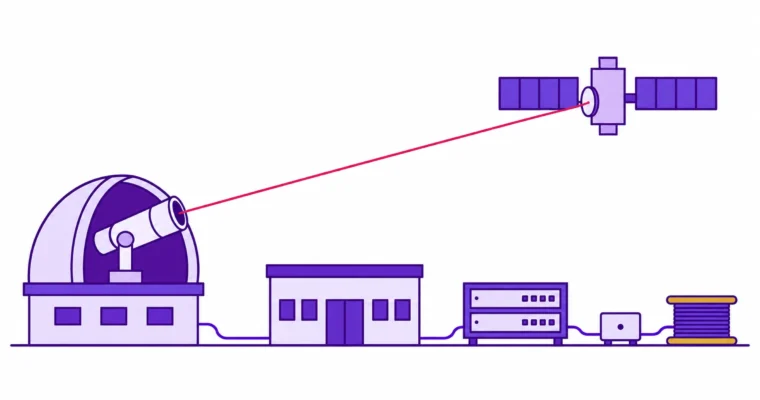
The same candidate can face three very different interview processes in quantum technology. A venture-backed startup may hire after two or three conversations and a short practical exercise. A large technology company runs a structured loop of screens, coding and technical interviews, and a panel. A national laboratory usually asks for a research seminar, followed by meetings with a committee that may take weeks to decide. Candidates who prepare for the wrong kind of quantum job interview can lose offers they were qualified for.
This guide describes each format and how to prepare for it. Individual employers vary, so treat it as a starting point and ask the recruiter how the loop works before the first interview.
Startups run few rounds and test broad skills
Quantum startups usually run short processes with little formal HR involvement. You may speak with a founder, the CTO, or the lead engineer within the first conversation. Small teams need people who can cover several areas without close supervision, so interviewers look for breadth and for evidence that you can work through an unfamiliar problem on your own.
Technical assessment tends to be practical. Instead of puzzle questions, expect a short project or a working session, such as using the company’s software development kit (SDK) to solve a small problem, debugging a control script, or analyzing a data set from the lab. For candidates with a strong research record, startups often spend less time re-testing technical depth and more on communication and judgment. They ask whether you can explain your thesis to someone outside your subfield and whether you can see how it connects to the company’s product.
Decisions can come within days. Be ready to discuss compensation, equity, and start date earlier than you would at a large company.
Structured, depth-focused loops at large technology companies
Quantum teams at large technology companies hire through the company’s standard engineering process. Expect a recruiter screen, one or two technical screens, and a final loop of several interviews, each assigned to a specific area such as coding, quantum fundamentals, system design, or past projects.
Software and algorithm roles include rigorous coding interviews alongside questions on quantum circuits, compilation, or error correction, depending on the team. Interviewers for hardware roles probe the physics and engineering of the modality the team works on. The team has to connect research to a product. As a result, many interviewers also ask product and scale questions, such as how you would design a cloud service that schedules jobs on quantum hardware for thousands of users.
The process is consistent and documented, and recruiters can usually tell you what each interview covers. Ask. Hiring decisions involve several approvals and typically take a few weeks.
National laboratories use academic-style evaluation
National laboratories and government research centers evaluate candidates much as universities do. The central element is usually a research seminar presented to the group, followed by questions from scientists in the audience. The seminar shows your depth, how clearly you communicate, and how your work fits the laboratory’s mission.
After the seminar come one-on-one meetings or a panel. Questioning can be as detailed as a thesis defense. Interviewers want to know how you would approach new problems and whether you can lead collaborations across institutions. They also ask whether you have experience writing proposals. Many laboratory scientists help secure their own funding. Laboratories give significant weight to your publication record, patents, and the experiments or software you built.
Hiring is often decided by committee and approved at several levels, so expect weeks to months. Roles involving classified work may also require a security clearance, which in the US is generally limited to citizens. Our guide to visas, relocation, and security clearances explains the rules.
How the three differ at a glance
| Startup | Large technology company | National laboratory | |
|---|---|---|---|
| Typical format | Two or three conversations and a practical exercise | Structured loop with coding, technical, and design interviews | Research seminar, then committee interviews |
| What they weigh most | Breadth, initiative, communication | Technical depth, problem-solving, scale | Research record, scientific judgment, mission fit |
| Who decides | Founders or team lead | Hiring committee within a leveling system | Selection committee with institutional approval |
| Typical timeline | Days to a few weeks | Several weeks | Weeks to months |
Preparation that works everywhere
Know the technology stack. Find out which tools and platforms the organization uses. For a software role, learn its SDK or programming framework. For a hardware role, understand its qubit modality and the equipment in its lab.
Prepare three project stories. For each, be ready to state the problem, what you did, what went wrong, and the result. Emphasize impact and delivery for industry interviews and scientific depth for laboratory interviews.
Refresh daily practice. For experimental roles, that means lab safety and equipment handling. For software roles, it means version control, testing, and code review. Interviewers notice candidates who can start contributing quickly.
Know what you can share. Be ready to discuss past work without disclosing confidential or export-controlled information. Saying plainly that a detail is under a non-disclosure agreement reflects well on you.
Keep your record current. Have an up-to-date list of publications, patents, talks, and open-source contributions. If you have few publications, prepare concrete examples of systems you built or problems you solved.
Connect your work to their goals. Show how you would help the startup ship its product, contribute to the company’s roadmap, or advance the laboratory’s mission.
Questions to ask them
Interviews run both ways. A few questions reveal a lot about the role and the team:
- What would success look like in this role after six months?
- How does the team decide which technical approaches to pursue?
- What is the publication and conference policy?
- For startups: how much runway does the company have, and when is the next funding milestone?
- For laboratories: how is this position funded, and for how long?
For employers designing their own interview process, our guides to writing a quantum job description and red flags in quantum recruiting cover the other side of the table. You can browse current quantum roles by technology area.
First published November 1, 2025. Revised November 10, 2026: an untraceable quotation was removed and sections on employer comparison and candidate questions were added.